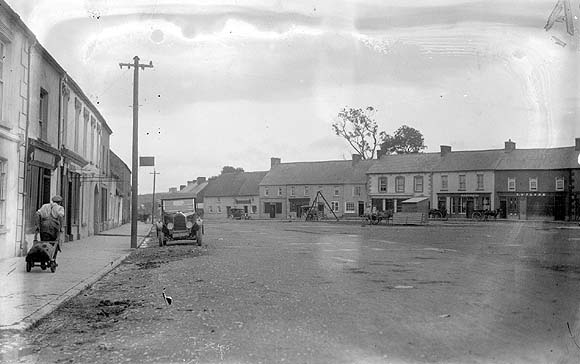
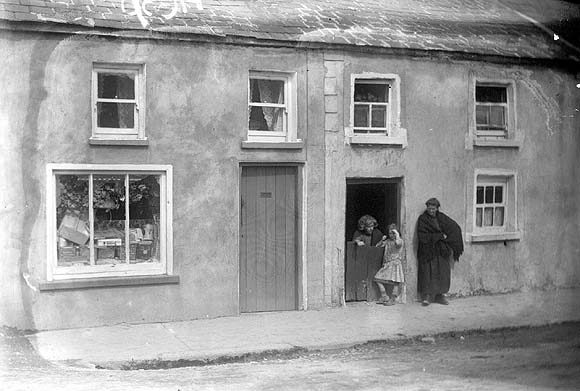
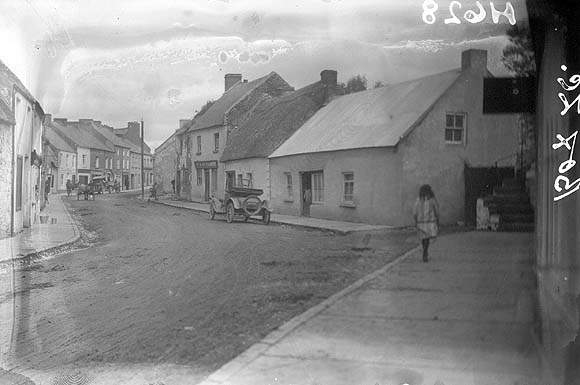
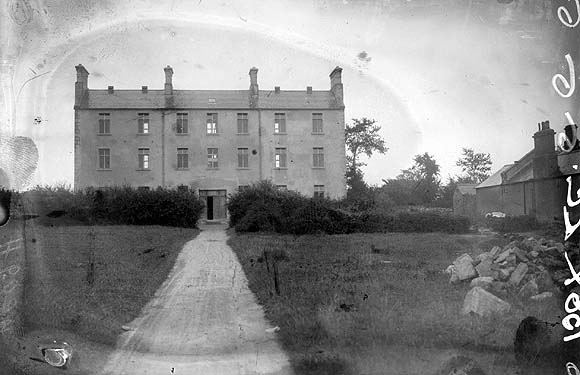
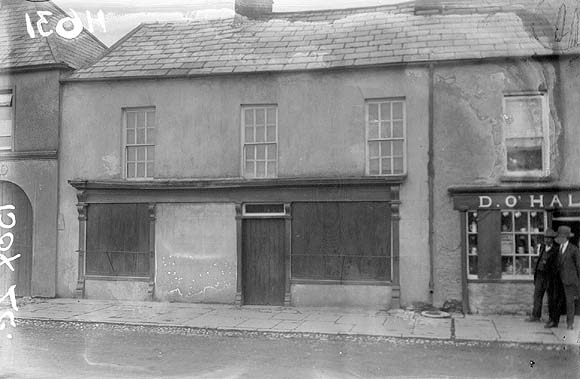
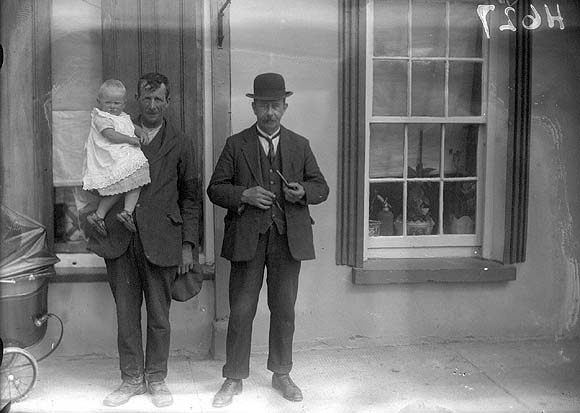
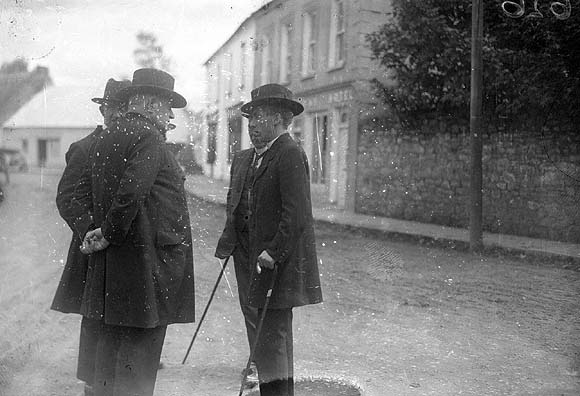
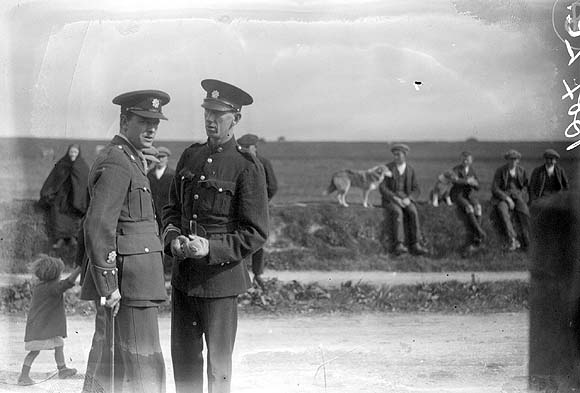
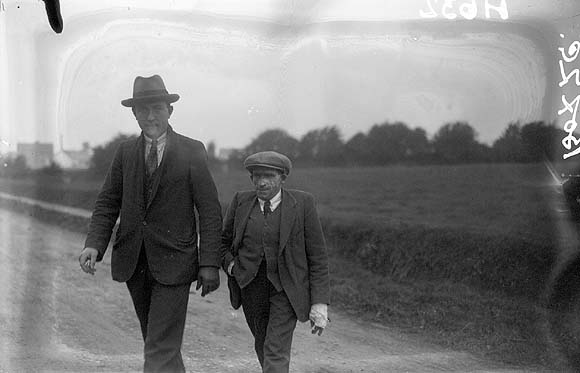
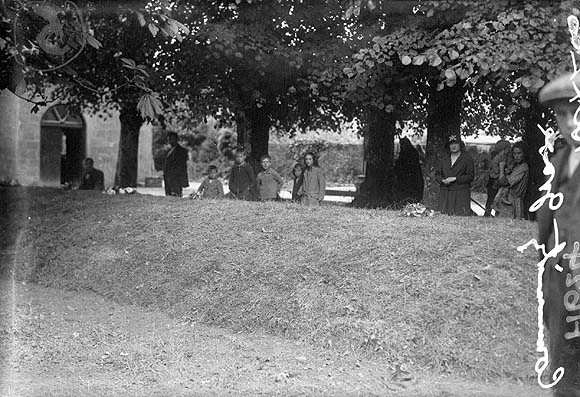
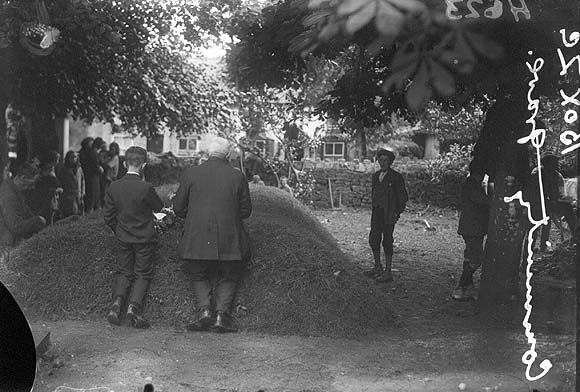
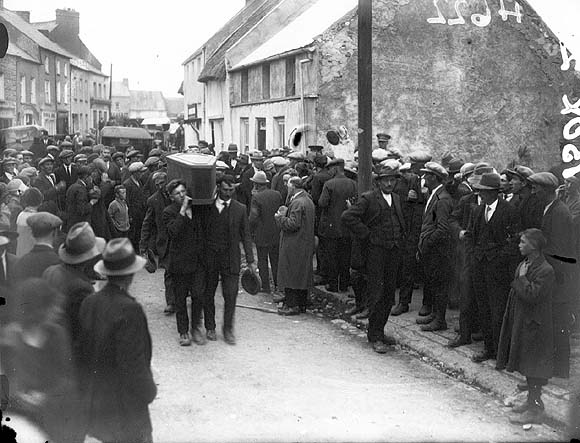
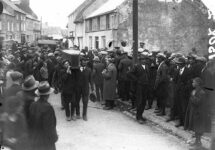
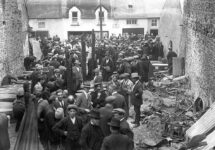
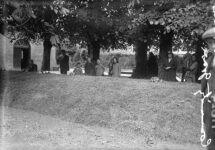
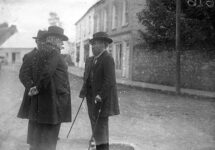
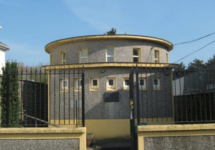
The coincidence of the Dromcollogher Cinema Disaster occurring a mere five months after the gathering of material for the first census since Independence allows us to create a profile of the village at the time of this great tragedy. In 1926, the population of Dromcollogher was 442, of whom 208 were male and 234 were female. The village was entirely Catholic, and the parish priest was Canon John Begley, author of the classic three volume History of the Diocese of Limerick. In addition, Jeremiah Newman, who would become President of Maynooth College and, latterly, Bishop of Limerick, was born in Dromcollogher in 1926.
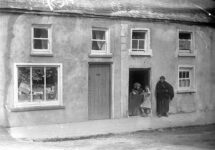
Economically, Dromcollogher was dominated by agriculture. In 1926, the workforce included 11 farmers; 4 shopkeepers who were also farmers; 3 farmers who were also publicans; 20 farm labourers; 4 cattle-dealers; 2 butchers and 2 creamery managers. The other major occupational group was retail, with 17 shopkeepers, 7 publicans, 12 shop assistants and 4 milliners. The village had 10 domestic servants, and a large number of self-employed tradesmen, including 6 carpenters, 2 tailors, 2 blacksmiths, 2 building contractors, 2 coach builders, 2 dressmakers, 1 bootmaker, 1 thatcher and 1 saddler. Many householders supplemented their income by keeping lodgers and there were three full-time lodging house keepers in the village. Finally, ‘public servant’ was an important category, including 5 teachers, 4 postmen and 1 sub-postmaster.
In 1926, 48 people or 11 percent of the village’s total population died in the Fire Tragedy. However, the 1936 census returned a population of 457 and since 1981, the village has usually had in excess of 500 people. In its long history, Dromcollogher has always demonstrated a capacity for revival and renewal.
Dromcollogher Through the Ages
Dromcollogher, sometimes spelt Dromcolliher, is a village situated in West Limerick, nine miles South-East of Newcastle West. Its name is derived from the Irish Drom Collachair, meaning ‘the ridge of the hazelwood’. According to the 2022 census, it had a population of 509. In recent decades, it has become associated with the Irish Dresden factory, established by the Saar family in 1962, which has gained an international reputation for its intricate and beautiful porcelain.
The earliest reference to Dromcollogher is from 1160 and it was a medieval and civil parish with mentions in church records dating from 1201. Dromcollogher’s history has been dominated by three families, the Fitzgeralds, the Courtenays and the Staveleys.
After the Norman invasion, the Dromcollogher area came into the hands of the great Norman family of Fitzgerald, who held the title Baron Desmond from 1259 and Earl of Desmond from 1329 to 1583. While the Earldom of Desmond ruled a vast area of Munster, including all of County Limerick, the Dromcollogher area was owned by a cadet branch of the Fitzgeralds, who held the title Lords of Cleanglass, and were based in Springfield Castle. During this period, there may have been a small settlement in the vicinity of the parish church, but this would not have been a village in the modern sense.
The Desmond Rebellion of 1579-83 resulted in the destruction of the Earldom and the confiscation of the Fitzgerald lands. In 1591, as part of the subsequent Plantation of Munster, an immense tract of land, including Dromcollogher, was granted to the Courtenay family of Devonshire, whose head of the family later became Viscount Courtenay and Earl of Devon. They were absentee landlords whose principal residence was Powderham Castle, near Exeter. At its height, the Courtenay Estate, centred on Newcastle West, amounted to 85,000 acres.
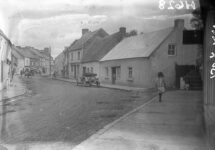
In the seventeenth century, the Courtenays established the village of Dromcollogher and laid it out as a typical Plantation town, consisting of a triangular marketplace (later renamed the Square) with three streets radiating from it. Its plan is almost identical to that of the classic Plantation town of Donegal, which demonstrates the influence of the Plantation of Ulster in County Limerick. In c1640, George Courtenay was granted a patent to hold a weekly market and two annual fairs in Dromcollogher. In 1709, the village consisted of twelve mud-walled thatched houses and eighteen cabins (tiny one-roomed dwellings). It was completely overshadowed by Newcastle West, the headquarters of the Courtenay Estate, which had seventy houses.
In 1807, the Courtenays sold Dromcollogher and its surrounding lands to the Staveley family, originally from Yorkshire, who had moved to Antrim and then to Cork. In the 1870s, by which time the Staveleys were living in Dublin, they owned 4,169 acres in County Limerick, including the village of Dromcollogher. The Staveleys were almost always absentee landlords and eventually sold the estate to their tenants in the early twentieth century.
During the nineteenth century, the village underwent great changes. The population reached its peak of 714 in 1841 but went into a long decline after the Great Famine, due to continuing emigration, falling to its lowest point of 409 in 1946. However, the Staveley era was also a period of progress and increasing prosperity. The Church of Ireland Church was opened in 1812 and the Catholic Church in 1824. The current streetscape emerged with the construction of stone, slated two-storey terraced dwellings and business premises. In the 1830s, the village acquired its first bank and post office. Public buildings such as the courthouse and creamery were added to the streetscape. After the Famine, retail premises and licensed premises proliferated as part of the Irish Retail Revolution of 1850-1900. Despite (or, indeed, because of) constant emigration, the standard of living rose steadily in these decades.
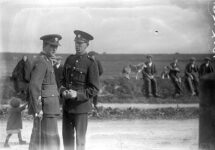
In the thirty years preceding the fire tragedy, Dromcollogher attained some national renown. In June 1889, the village played a central role in the history of the Irish Co-Operative Movement, when the first co-operative creamery in Ireland was opened there. In 1894, famed song writer Percy French wrote There’s Only One Street in Drumcolliher, a comic song that paid affectionate tribute to his pleasant stay in a local guesthouse owned by Anthony McAuliffe. More sombrely, the village witnessed two major incidents during the War of Independence: the burning of the local courthouse (1920), in which three IRA volunteers died from severe burns and the Drumcollogher Ambush, in which an RIC constable was killed.